The Role of Noises in Chinese Dining Etiquette: A Cultural Insight
Slurping, burping, and rènao — why a good meal in China is supposed to be loud, and what the old ritual texts actually said about it.
contents
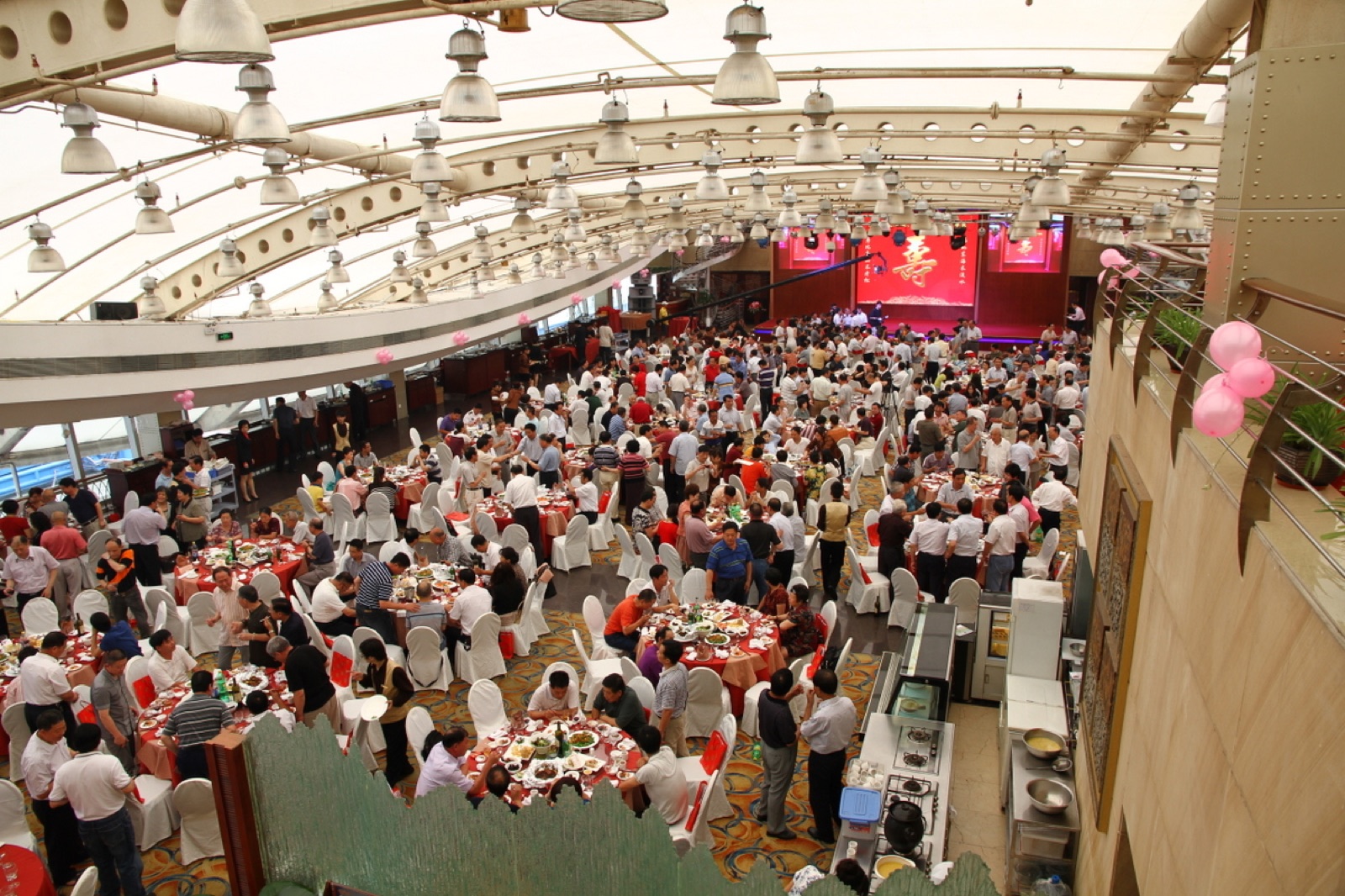
Sit down at a proper Chinese banquet and the first thing you notice isn’t the food — it’s the noise. The lazy Susan creaks as someone spins it toward the last dumpling. Ice cracks in a dozen glasses. Someone two seats over is halfway through a bowl of noodle soup, slurping with real commitment. Over all of it, a half-dozen conversations run at full volume, punctuated by toasts. If you grew up eating dinner in near-silence, your instinct is to apologize for existing.
That instinct is misplaced. The noise isn’t a lapse in manners — it has a name, 热闹 (rènao, literally “hot and noisy”), and in Chinese social life it isn’t the exception to a good meal. It’s closer to the definition of one.
Rènao: the case for a loud table
Rènao is one of those words that resists a clean English translation, built from 热 (hot) and 闹 (noisy, bustling). Marketing researchers who set out to pin it down found it clusters around a specific set of associations — crowds, food, noise, and a sense of occasion — that Chinese consumers consistently link to a successful social space.1 A restaurant that’s dead silent isn’t calm, in this reading; it’s failing. A wedding banquet, a hotpot dinner where six people are talking over each other, a market at dusk — these are rènao, and rènao is good. It’s the same logic behind the firecrackers and gongs at Lunar New Year: noise announces that something worth celebrating is happening, and it’s meant to be heard.
Slurping and burping sit inside that framework. They’re not purely about the food-appreciation angle the internet loves to repeat, though that’s part of it — they’re evidence that you’ve relaxed into the room. Eating in total silence at a family dinner reads less like discipline and more like distance.
The actual physics of a slurp
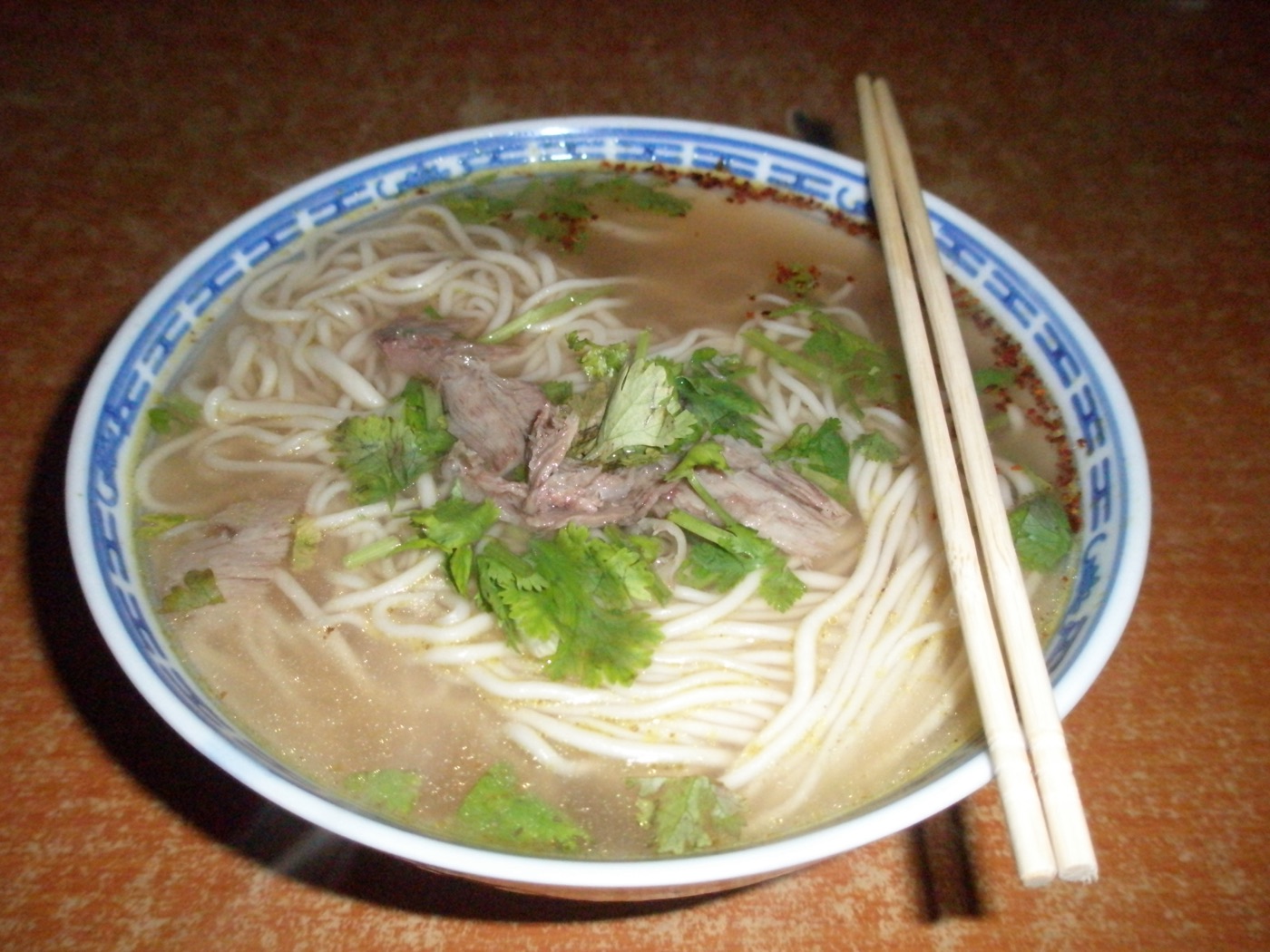 Lanzhou beef noodle soup — the kind of bowl slurping was made for.
There’s also a mechanical reason the sound happens at all, and it’s the same one across the noodle-eating world. Pulling broth and noodles in fast draws a rush of air in alongside them, which does two things at once: it cools food that’s often served close to boiling, and it aerosolizes the broth’s aromatic compounds, forcing them up the back of the throat toward the olfactory receptors behind the nose. That pathway is called retronasal olfaction, and it’s most of what “flavor” means once you get past the five basic tastes. A 2021 study in Frontiers in Nutrition found that more vigorous, more numerous chewing strokes measurably increase the concentration of aroma compounds reaching the nose — more forceful eating quite literally tastes like more.2
Japan’s soba shops arrived at the same mechanism from the opposite direction. Soba culture took shape in Edo-period Tokyo, where buckwheat noodles were cheap, fast food sold from street stalls to laborers eating standing up — no time and no occasion for the formality of a sit-down meal. Slurping (susuru) caught on partly because cold soba’s aroma is faint, and drawing it in fast with a rush of air is close to the only way to taste it at all; one Tokyo soba-shop owner has compared the technique directly to how a sommelier aerates wine.3 It’s a strikingly similar physical trick to the Chinese case, arrived at from a completely different direction — Japan’s noodle noise grew out of the practical demands of cheap street food, China’s grew out of a broader value placed on a lively table. The sound is the same. The reason for it isn’t.
What the old rules actually said
This is the part the “ancient Chinese tradition” version of this story usually skips: the classical texts most associated with Chinese dining ritual don’t endorse noise. They endorse the opposite.
The Analects record Confucius eating in careful, deliberate quiet: “When eating, he did not converse. When in bed, he did not speak.”4 It’s not a throwaway line, either — a South China Morning Post columnist recently traced her own family’s mealtime silence straight back to it, describing a childhood where talking at dinner simply wasn’t done, on the belief (also drawn from traditional Chinese medicine) that conversation, and even too much liquid, worked against digestion.5 The Book of Rites (Liji), one of the Five Classics compiled from Zhou-dynasty material, goes further, devoting whole passages to the correct choreography of a banquet: who sits facing the door, who tastes the food first, how dishes are apportioned down the table.6 Anthropologist Eugene Cooper’s field account of contemporary Chinese table manners makes the same argument from the other end — much of what happens at a Chinese table, he writes, is a system for communicating rank and relationship, dressed up as generosity: who serves whom, who eats first, who gets the best piece.7 None of that is loud. It’s closer to choreography than celebration.
Even now, etiquette guides written for a Chinese audience keep both halves of this alive without much apparent friction. A list of core table manners circulated by the World Federation of Chinese Catering Industry puts “the eldest tastes first” right next to “keep quiet while eating, per Confucius” — two rules from the same code, neither one about slurping.8
So the honest version of this story runs on two registers, not one continuous “ancient tradition of joyful noise.” A formal register — quiet, hierarchical, closely watched — inherited from ritual texts over two thousand years old. And a separate, more vernacular register, rènao, that prizes exactly the opposite: noise, crowding, a table so alive it spills over. Slurping your soup lives entirely in the second register. Do it in front of the wrong people at the wrong table and you’ll get a very different reaction than you will halfway through a hotpot with friends.
Same country, different room
That’s really the throughline: how much noise is welcome depends far more on the room than the country. A business banquet in Beijing runs on the formal register — assigned seating built around seniority, a fixed order for toasts, a junior colleague angling their glass slightly lower than a senior’s when clinking, as a small, wordless sign of deference.9 A hotpot dinner with friends in Chengdu runs on rènao, and nobody there is quietly monitoring anyone’s noodle technique.
Journalist Luisa Tam put the personal version of this well, in a column defending her own eating habits abroad. She’ll adjust plenty about how she eats when she travels, she wrote — but she wasn’t going to sit through a bowl of noodles in dignified silence and pretend she wasn’t enjoying them. After warning her French hosts what was coming, she “slurped through it unashamedly” until the bowl was empty, and came away, in her words, feeling liberated.10
Burping gets folded into the same story constantly — you’ll find it stated flatly, across a hundred travel guides, that a burp is a compliment to the chef in China. Treat that one with a bit more caution than the slurping claim. It’s real enough as a piece of folk belief and older etiquette, repeated in guide after guide for decades,11 but it’s also one of the first things to have softened with a generation raised on international travel and Western dining norms — particularly in cities, and particularly at anything resembling a formal meal. It hasn’t disappeared. It’s just no longer quite the safe bet the internet makes it out to be.
Conclusion
None of this makes the popular version of the story wrong, exactly. Slurping really is fine, often genuinely appreciated, and physically tied to how the food actually tastes. It just isn’t a straight line back to some unbroken ancient custom of joyful eating noise — it’s closer to a compromise Chinese dining culture has always negotiated between two real, competing instincts: the old ritual insistence on order and restraint, and a newer, equally strong sense that a good table should sound like one. Next time you’re at a meal that’s properly rènao — loud, crowded, dish after dish still arriving — slurp with a clear conscience. Just read the room first.
Photo credits: cover photo by Ctny (CC BY-SA 3.0); noodle-soup photo by Berthe (CC BY 3.0), both via Wikimedia Commons.
References
-
Warden, C.A., & Chen, J.F. (2009). When hot and noisy is good: Chinese values of renao and consumption metaphors. Asia Pacific Journal of Marketing and Logistics, 21(2), 216–231. ↩
-
Okawa, J., Hori, K., Yoshimoto, T., Salazar, S.E., & Ono, T. (2021). Higher masticatory performance and higher number of chewing strokes increase retronasal aroma. Frontiers in Nutrition, 8, 623507. ↩
-
Motohashi, T. (2017, June 20). A Cultural History of Noodle Slurping. Nippon.com — soba-shop owner Horii Yoshinori compares slurping’s aroma-release effect to wine-tasting technique. ↩
-
The Analects, Book X (“Xiang Dang”), trans. James Legge, via the Chinese Text Project. ↩
-
Yang, X. (2026, June 27). Talking when you eat is bad for you, and other Chinese beliefs. South China Morning Post. ↩
-
Liji. Encyclopaedia Britannica — overview of the Book of Rites’ place in the Confucian ritual canon and its treatment of banquet and ceremonial procedure. ↩
-
Cooper, E. (1986). Chinese Table Manners: You Are How You Eat. Human Organization, 45(2), 179–184. ↩
-
8 Tips for Chinese Table Manners, World Federation of Chinese Catering Industry, via Google Arts & Culture. ↩
-
Chinese Business Dinner Etiquette: The Essentials (China Law Blog, Harris Sliwoski LLP, updated 2025-09-24 — on toast order, seating by seniority, and glass-clinking etiquette). ↩
-
Tam, L. (2018, December 3). It’s nice to respect different cultures’ table manners – but I won’t stop slurping my soup noodles. South China Morning Post. ↩
-
Where Is Burping a Compliment? 14 Global Etiquette Differences. Reader’s Digest. ↩
Comments
Select any passage above to comment on it directly. Markdown supported.
Loading comments…